An evening by the fire
Published on 2 August 2026
Park or chain: what we learned comparing our practices with other mushers
On a late July evening, about ten French and Québécois mushers met by videoconference for a rare exercise: comparing, without taboo, two ways of housing a kennel — the semi-free park and tethering. We were among them. Two hours and twenty minutes of exchange, and what we take from it.
What really matters
The first thing the conversation laid bare was a misconception: it's not the square meters that bring peace to a group. It's the number of corners. A 1,500 m² park with no rocks, no shelter, no hollow where a dog can isolate itself from view, is riskier than a smaller space divided into zones where each can step aside. Our dogs live in a group because we believe that's what they want — but a group that can't disperse a little gets tense.
Second misconception debunked: the "pack leader". Linear hierarchy, modeled on observations of wolves in captivity in the 1960s, was called into question by its own author twenty years later — a point few people know about, including in our field. What you observe in a semi-free kennel looks more like contextual social relations: one dog is uncompromising about the food bowl and indifferent to everything else; dominance shifts depending on the resource, the moment, the individual involved.
What we didn't hide
What made the evening useful was that it embellished nothing. Three participants who had housed eight to ten or more dogs per enclosure each experienced a serious accident — for different reasons each time. One dog was severely bitten after a fight that started with no warning sign; another was lost in a comparable situation. No one minimized.
And the counter-example was just as clear: tethering doesn't prevent everything. One of the mushers present reported a fight that occurred between two dogs tethered at the stakeout — one had its inner lip completely torn open. No system eliminates risk. The real question, repeated several times, is: what risk do you choose, and what do you put in place to limit it.
Cases where we adapt
Nothing said was dogmatic. The transition from tethering to park, when it happens, must be gradual — careful reading of each dog's behavior, short attempts in human presence, isolation at the slightest doubt. Groups of three to five dogs were presented as a very accessible level, more than sufficient to regain the essential social benefits without the complexity of a large park.
One testimony struck us particularly: dogs used to the park, temporarily tethered during construction work, had developed withdrawn behavior in a few days — head down, vacant stare, nocturnal whining in dogs that had never whimpered at night. A simple collective release in the evening was enough to reverse the trend. The musher telling this summed it up like this: morale is half of training.
The Skimate spirit
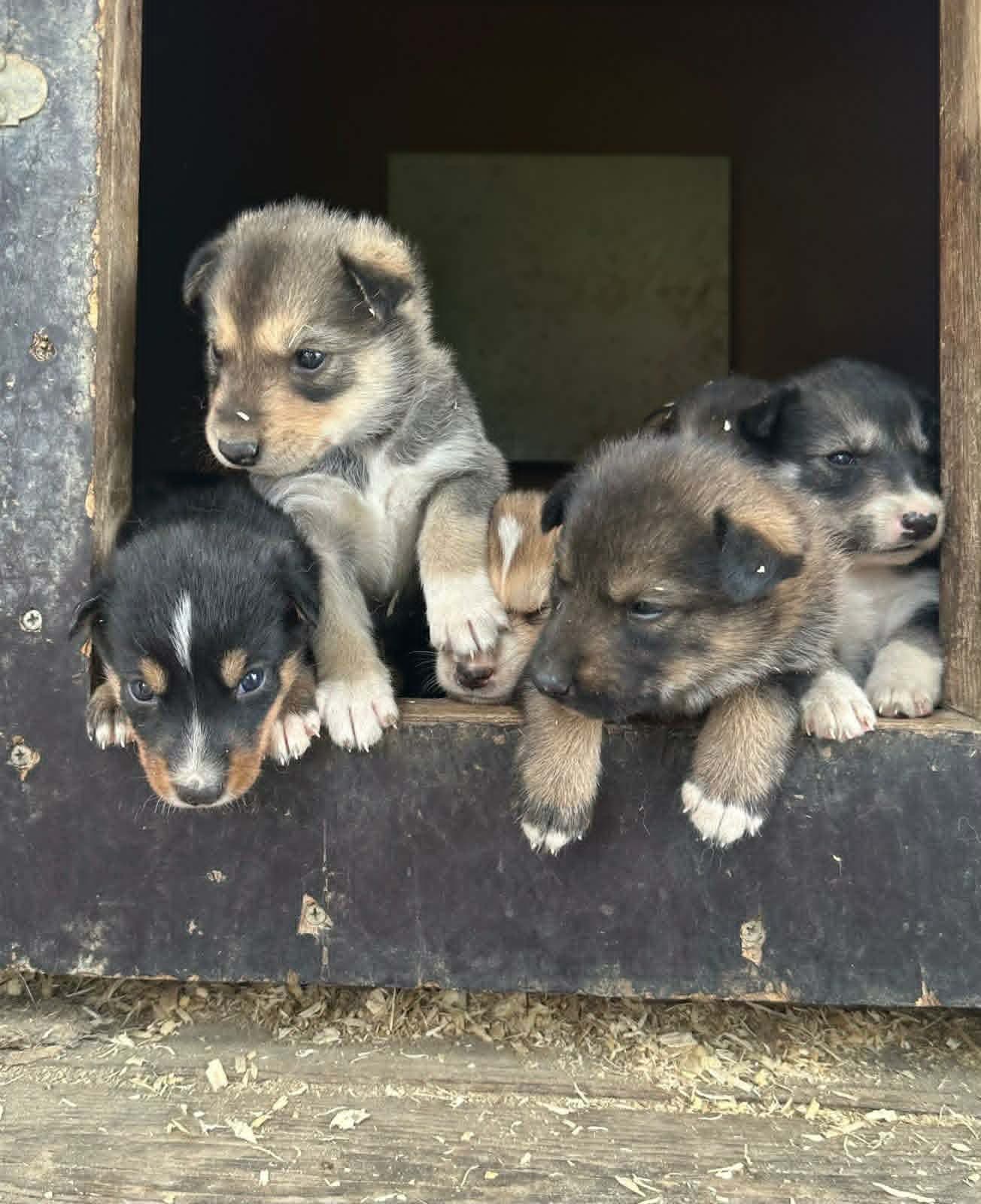
That's exactly why we choose the park for our own dogs in Laponia: because a dog that has a choice — of its corner, its shelter, the distance it puts between itself and others — is a dog that shows us something other than obedience. It's not a method that's improvised, and this evening reminded us once more: it's built with time, observation, and the honesty of recognizing what doesn't work.
A question about how our dogs live in Laponia? Write to us, we'll answer you honestly.