Traveling in Lapland in summer — when coolness becomes a trend
Published on 1 July 2026
The preamble
For a few years now, a word has appeared in the vocabulary of travel: coolcation. A contraction of cool and vacation, it describes this growing trend of choosing a vacation destination not for its sun, but for its coolness.
It's no longer a rumor — the figures confirm it.
L'Écho Touristique reports a marked increase in foreign overnight stays in Sweden since this trend began. The travel app Polarsteps, in its Summer Heat Escape Index, ranks Sweden fourth in Europe among the best destinations to escape extreme heat. A global Booking.com survey reveals that nearly half of travelers now plan their vacations based on climate disruption.
Swedish Lapland, where we have been living since October 2025, is at the heart of this dynamic.
So how do you travel here in summer, when this corner of the world becomes trendy? Here are a few answers.
Swedish summer is not just "cool"
It might be the first thing we'd like to say — summer in Lapland is not just about its temperature.
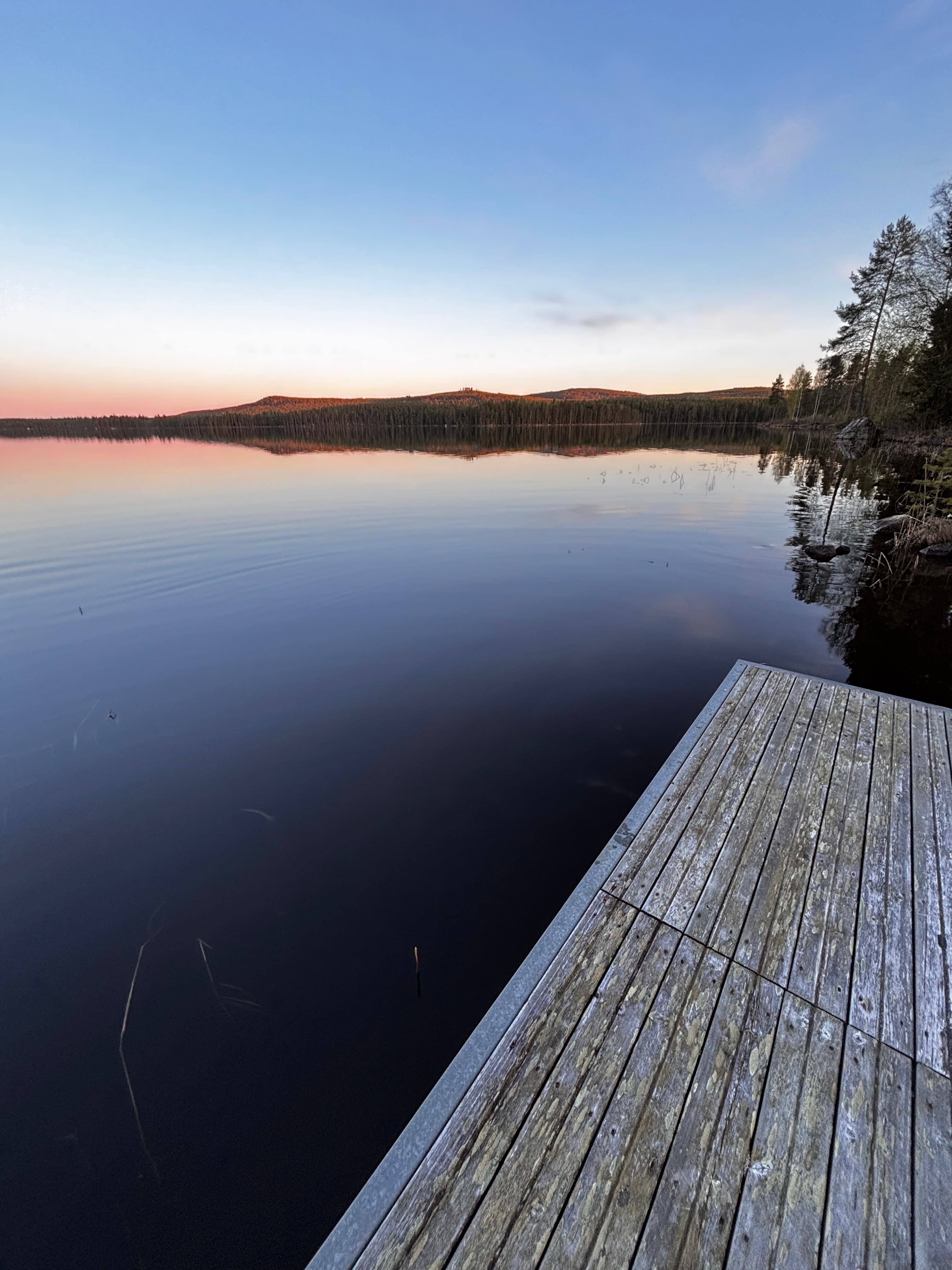
Here, between June and August, the day doesn't stop. The midnight sun shines until mid-July. It is daylight twenty-four hours a day. The lakes warm up to the point where you can swim in them (around 15-18°C, which is still brisk, but not glacial). The boreal forest, still damp and cool in the shade, explodes with life — wild blueberries, chanterelles, migratory birds.
And above all, nature is silent. Few people. Little noise. Little traffic. It's this quality — not just the coolness — that makes Lapland summer special.
Reducing this corner of the world to "coolness" would be to miss the essential.
A trend that raises questions
That said, the influx of summer tourists is not without raising concerns.
The Swedish site Krisinformation.se, which centralizes public safety alerts, clearly shows the increasing frequency of summer risks: forest fires during dry periods, episodes of heavy rain causing floods, heat alerts (yes, even here). The country is not immune to climate disruption — it experiences its own extremes.
To this is added the pressure of tourism. Some remote or coastal regions of Sweden are seeing increases in visitor numbers reaching 50% in just a few years. A sudden influx of campers, if not regulated, weakens local ecosystems and complicates waste management — in territories that are not sized to absorb these volumes.
It's a familiar paradox: those who come seeking intact nature can, without realizing it, contribute to its degradation.
Allemansrätten — a model to understand before you come
In Sweden, the relationship with nature is framed by a unique principle: the allemansrätten, literally "everyone's right".
This constitutional right authorizes any person to move freely through nature, to camp, to pick mushrooms and wild fruits, to navigate on lakes. It is extraordinary — and it is also a responsibility.
The allemansrätten rests on a tacit contract: do not disturb, do not destroy. Concretely, this means:
- Do not set up camp in sight of a dwelling (the rule is hemfridszonen — the "zone of domestic peace")
- Do not light a fire during dry periods
- Leave nothing behind — not a cigarette butt, not a wrapper
- Respect reindeer, fawns, nests, young plants
- Understand that what you see belongs to someone (a municipality, private property, a Sámi people) even when it is not marked
These rules are not tourist recommendations. They are the foundation of how Swedes have lived with their nature for centuries.
Coming here without knowing them means missing the culture that makes this corner of the world possible.
Our approach — coming in small groups
Skimate welcomes two to six guests per week, a few weeks per year. It is not an economic choice — it is a structural choice.
We believe that the nature of Lapland cannot absorb any volume of visitors. It demands slowness, attention, discreet presence.
Concretely, this means:
- A pace adapted to each season — we do not force activities when the weather, heat or drought advise against it
- An integration into the place — we live here, not seasonally. We continue each year to learn the territory, its seasons, its culture. This allows our guests to come with precise reference points, adapted to the time of their visit.
- Accompaniment for each guest — so that everyone leaves having understood how the place works, not just "having seen it"
- The refusal of mise en scène — no reconstructed "Lapland experience". Just what already exists.
It is one way among others to experience travel. We do not claim it is the only way. We simply think it corresponds to what Lapland is asking for today.
Coming well — some practical advice
If you are planning to travel to Swedish Lapland this summer (with or without us), here is what seems important to us:
Check Krisinformation.se before you leave and during your stay. The site is available in English and centralizes all safety notices (fires, floods, storms).
Read about the allemansrätten — a few articles will suffice. The Naturvårdsverket (Swedish nature protection agency) website offers a clear summary in English.
Avoid heat wave periods — yes, they happen here too, usually late July early August. Check the forecast.
Favor small local structures — family hotels, integrated camps, lodges run by Swedes from the area. This is what redistributes tourism revenue where it should go.
Travel in every season — summer is not the only window. Lapland is beautiful in September (the ruska, autumn colors), in February-March (the return of light), in May (the awakening). Avoiding peak months also means respecting the place.
To finish
Travel is changing. We cannot continue to travel as we did twenty years ago, nor as we did ten years ago. Heat waves, fires, overtourism are forcing all of us to rethink what we do when we go on vacation.
Swedish Lapland has a chance — that of still being preserved. This chance is fragile.
Coming here means accepting this fragility. It means learning the rules before living them. It means choosing to leave fewer traces than you have taken.
We believe this is possible. It's even the only way.
Welcome to Lapland — when you are ready.
🐾
Kristell